Office Clearance in West Ham
Office clearance in West Ham needs a service that is organised, careful and able to deal with different kinds of workplace contents without making the process more complicated than it should be. We handle clearances for offices, shared workspaces, storage rooms and commercial premises where furniture, filing, fixtures and general contents need to be removed with attention to access, sorting and disposal routes. The aim is a practical clear-out that leaves the space ready for its next stage of use.
Our work can include single items, grouped office furniture, archived paper, broken fittings and mixed contents that have built up over time. For many customers, the most useful approach is to separate what can be reused, what needs specialist handling and what should be removed for disposal. We focus on making the clearance straightforward, with an emphasis on tidiness, sensible sequencing and clear communication before the work begins.
Use this page to understand the main kinds of office clearance support available and how those services fit different premises in West Ham. If you already know what needs to go, you can request a quotation once the scope is clear; if you are still comparing options, the sections below explain the service areas in more detail and help you decide what level of clearance is appropriate. Pricing and quotes can also help when you want to compare the practical factors that shape a job.
Desks, chairs and everyday office furniture

Furniture is often the starting point for an office clearance because desks, chairs, shelving and storage units usually take up the most space and require the most planning to move safely. We remove individual pieces as well as full room contents, taking care to work in a sensible order so that larger items do not block the way for smaller, lighter items. That matters in offices with narrow corridors, shared entrances or lift access that needs to be kept clear while the job is underway.
Different furniture types call for different handling. Office chairs may stack or dismantle easily, while desks and cabinets can need more careful movement, particularly where cable trays, locks or fixed components are involved. If you are replacing a whole suite of workplace furniture, grouping similar items together before the clearance can make the process smoother, but it is not essential. We can also combine furniture removal with furniture clearance when the job is focused on items that are no longer wanted but still need orderly removal.
Some office layouts require a phased approach, especially where staff are still using part of the space. In those cases, the most helpful plan is often to identify what stays, what goes first and what needs extra care because it is attached to the building or connected to existing services. That keeps disruption under control and helps ensure the final result is neat rather than rushed.
Paper files, archives and mixed contents

Many office clearances involve more than furniture. Filing cabinets, boxed records, stationery, display materials and other mixed contents can accumulate in cupboards and back rooms, and each category may need a different approach. Some items are simply no longer needed, while others may contain confidential or sensitive material that should be handled carefully. A sensible clearance plan separates these groups before removal so that the work is not slowed down by avoidable sorting on site.
Where paper records are involved, customers often want to make sure the unwanted material is dealt with in a way that is orderly and responsible. That may mean keeping retention-sensitive files apart from routine office waste, or making sure sealed boxes are identified before removal begins. Our business waste removal service can be a useful option when the office clearance includes a broader mix of commercial waste streams rather than furniture alone.
It is also common for a clearance to uncover items that were stored for later review and then forgotten: spare monitors, old promotional stock, archived binders, unused equipment and miscellaneous contents from cupboards or storage rooms. Rather than treating everything as a single pile, we look at the practical categories and remove each one in a logical sequence. That makes the work more manageable and helps the remaining space become usable again without unnecessary clutter.
Workspaces, storage rooms and back-of-house areas
Office clearance is rarely limited to the main desk area. Storage rooms, kitchenettes, reception back rooms and utility spaces often hold a surprising amount of surplus material, especially in premises that have changed use several times. These areas can contain old chairs, broken fittings, archive boxes, packaging, display stands and loose office equipment, all of which may need different handling depending on their condition and how they are stored.
Clearance work in these spaces benefits from a methodical sequence. Start with the items that are easiest to access, then move through the heavier or bulkier contents so that the room can be opened up safely. That approach reduces the chance of missed items and helps create a proper finish, especially where shelves, cupboards and floor space have all been used for temporary storage. Where a project also includes household contents from a converted workspace, home clearance may be relevant for the domestic side of the job.
For businesses that are changing layout, downsizing or vacating part of a building, back-of-house areas often need more attention than the public-facing office itself. They are the places where accumulated items tend to hide, and they can require a slower, more careful pass to make sure the clearance is complete. A good result is not only about removing visible clutter; it is also about leaving the space accessible and ready for follow-on work.
Commercial waste, recycling and disposal choices

Not every item from an office clearance follows the same route. Some materials are suitable for recycling, some are better reused if they are still in good condition, and some must be disposed of in line with the type of waste they are. The value of a structured clearance service is that these decisions are made sensibly instead of at the last minute. That helps keep the work orderly and avoids treating useful equipment and general waste as if they were the same thing.
When a premises contains a mixture of furniture, packaging, fittings and office waste, it helps to think about the clearance in stages. First comes the removal of the main bulky items, then the smaller contents, then the finishing pass through cupboards, shelves and corners. If the project includes a broader clean-out of industrial or construction-related material, builders waste clearance may be a better fit for that separate portion of the work, while office contents continue to be managed through the main clearance plan.
Responsible disposal is not only a matter of sending everything away. It is also about recognising when an item still has a useful life, when it should be separated for a different waste stream and when it needs straightforward removal. That is why a clear description of the contents is so helpful before work begins. It allows the clearance to be matched to the material rather than forcing all items into one general category.
Preparing an office clearance in West Ham

A useful quotation starts with a clear picture of the items, access and overall scope. If you are arranging office clearance in West Ham, it helps to note whether the work covers one room, a whole floor or a multi-room premises, and whether there are lifts, loading restrictions or shared entrances to consider. Photographs and a short inventory can make this easier to assess, especially where there are several item types mixed together. One focused description of what needs to go is often enough to begin with.
It also helps to identify anything that must stay in place, any contents with special handling needs and any parts of the site that require extra care, such as fitted units or equipment still in use. If you want to compare scope and likely costs before deciding, pricing and quotes is a sensible place to start, and a plain-text request for a quotation is just as useful if you are ready to outline the work directly. For many customers, simple preparation saves time later.
Once those points are clear, the clearance can be planned in a way that fits the site rather than interrupting it. That is especially useful in workplaces where staff are still operating in part of the building or where access must be kept open for deliveries. A good enquiry gives enough information to estimate the scale of the job without requiring unnecessary detail.
Furniture disposal and office contents removal
Some office projects are essentially disposal jobs, while others are broader clearances that also involve sorting and separation. Furniture disposal is usually the practical answer when desks, cabinets, seating or meeting-room items are beyond reuse and need to be removed with care. The important part is making sure each item is handled in a way that suits its size, condition and location, especially in buildings where carrying routes are tight or shared with other occupants.
Where an office clearance overlaps with a general clean-out, it is often better to think in terms of the contents rather than the room itself. That allows the right decision to be made for each item and keeps the process consistent from start to finish. Our furniture disposal page can be useful when the main concern is the removal and onward handling of unwanted office furniture rather than a wider premises clearance.
Clearances like these are usually most efficient when the bigger items are identified first. That creates space for smaller contents to be gathered and checked without blocking routes or leaving awkward piles behind. It also means the finished room is easier to hand over, clean or repurpose. Order matters in office disposal work because the final result depends on how the removal is staged, not only on how much is taken away.
About West Ham
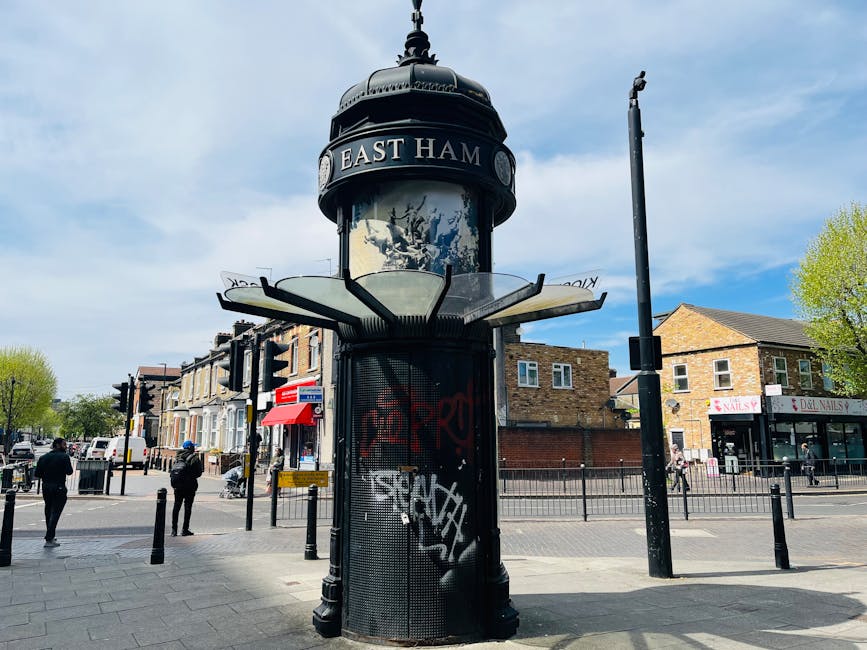
West Ham is a historic area in East London within the London Borough of Newham, shaped by centuries of change from rural settlement to suburban and industrial growth. The name is older than the modern football club and is linked with the medieval parish and manor that once covered a large part of the locality. The area sits between Stratford, Canning Town and Plaistow, and its character reflects that position between major routes, railway development and the Thames-side industrial belt. Over time, dock-related employment, manufacturing and later redevelopment all left their mark on the landscape. Large stretches of the district were altered by 19th- and 20th-century housing, transport infrastructure and wartime damage, followed by later regeneration. St Luke’s Church, also known as the Old Church, is one of the best-known surviving historic buildings and is often cited for its long continuity in a place that changed rapidly around it. West Ham Park, a large public green space, provides a significant open area in an otherwise dense urban setting. Nearby transport links and the wider E15 and E13 districts connect West Ham to the changing story of East London, where railway lines, terraces, estates and newer developments sit alongside older streets and civic landmarks. The area’s identity is therefore a mixture of inherited local history and modern urban renewal, with traces of both visible in the built environment and in the way different parts of the district relate to each other.
Clearing larger premises and staged handovers
Some jobs are not simple one-room clearances but staged handovers across several parts of a building. That can include meeting rooms, open-plan floors, storage cupboards, reception areas and any areas that were used temporarily during a relocation or refit. In these situations, the best approach is often to prioritise the heaviest or least useful items first, then work methodically through the remaining contents so that the site can progress in sensible phases.
A staged clearance is useful when different parts of the premises will be dealt with at different times. For example, one area may need to be cleared before contractors arrive, while another can wait until staff have moved out. Where office contents are only part of the work, a related service such as flat clearance may be appropriate for the domestic section, but the office work itself should still be planned according to the premises layout and the items present. That keeps the scope accurate and reduces confusion.
When clearance is tied to a handover, the final check matters as much as the removal itself. Cupboards should be opened, shelves reviewed and any remaining loose contents identified before the job is marked complete. That last pass is what turns a partial tidy into a proper clearance. It is also where any overlooked small items, cables or paperwork can be gathered without having to revisit the site later.
What affects the scope of an office clearance
The scope of an office clearance is shaped by the number of rooms, the type of contents, how easily items can be accessed and whether anything needs special handling. A few desks in one room are very different from a full premises clear-out with storage areas, equipment and mixed waste. Understanding those differences is important because it keeps expectations realistic and helps the quotation match the work that actually needs doing.
Access is one of the most practical factors. A ground-floor office with a direct route out will usually be simpler than a building with stairs, restricted parking or shared access times. The condition of the items also matters: flat-pack furniture, metal shelving and stackable chairs are handled differently from heavy cabinets or awkward fittings. If the clearance includes general waste as well as office contents, waste removal can sit alongside the office work where that broader service is the better fit.
Good planning means the job can be broken down sensibly rather than treated as a single lump of work. That is why a short list of what is to be removed, along with any practical access notes, is usually enough to begin a sensible discussion. It gives a clearer basis for a quotation and helps avoid assumptions about the amount of labour or number of items involved.
Booking a quotation for office clearance
If you are ready to move forward, the next step is to request a quotation with a brief description of the office contents and the premises layout. Mention the main items, any bulky furniture, whether there are archives or mixed waste, and whether the work needs to be split into more than one area. That information makes it easier to assess the scale of the clearance and determine the most practical way to approach it. If you want to compare this with related services, you can also review office clearance alongside the other removal options available on the site.
For enquiries that include specialist handling or unusual items, it is helpful to mention that early rather than leaving it until the day of the job. That applies to large cabinets, metal racking, items fixed into place and contents stored in tight or awkward locations. You do not need a perfect inventory; a clear summary is usually enough. Plain, accurate details are more valuable than a long message with guesses about what might be present.
When the scope is clear, the quotation process can be straightforward. If you are at that stage now, request a quotation and outline the premises, the items and the access arrangements in a short message. The clearer the starting point, the easier it is to match the clearance to your office in West Ham and agree the right level of work.